Here is everything you need to know about Vodafone Germany’s announcement of major uplink performance improvements to their 5G standalone network.
On 22 May 2026, Vodafone Germany announced the introduction of a new feature to their 5G standalone mobile network that enables faster upload speeds. This new feature is called Release 16 5G Uplink Carrier Aggregation with TX Switching. If you would like to find out more about the uplink TX switching feature, I made a video about it in 2024, check it out here.
It essentially combines two 5G uplink features: 5G uplink carrier aggregation and 5G uplink MIMO, which are utilised when TDD and FDD cells are aggregated. In short, 5G uplink carrier aggregation describes the ability to aggregate multiple uplink carriers and combine their uplink capacity, while 5G uplink MIMO describes the ability to utilise spatial multiplexing and thus multiple data streams in one uplink carrier.
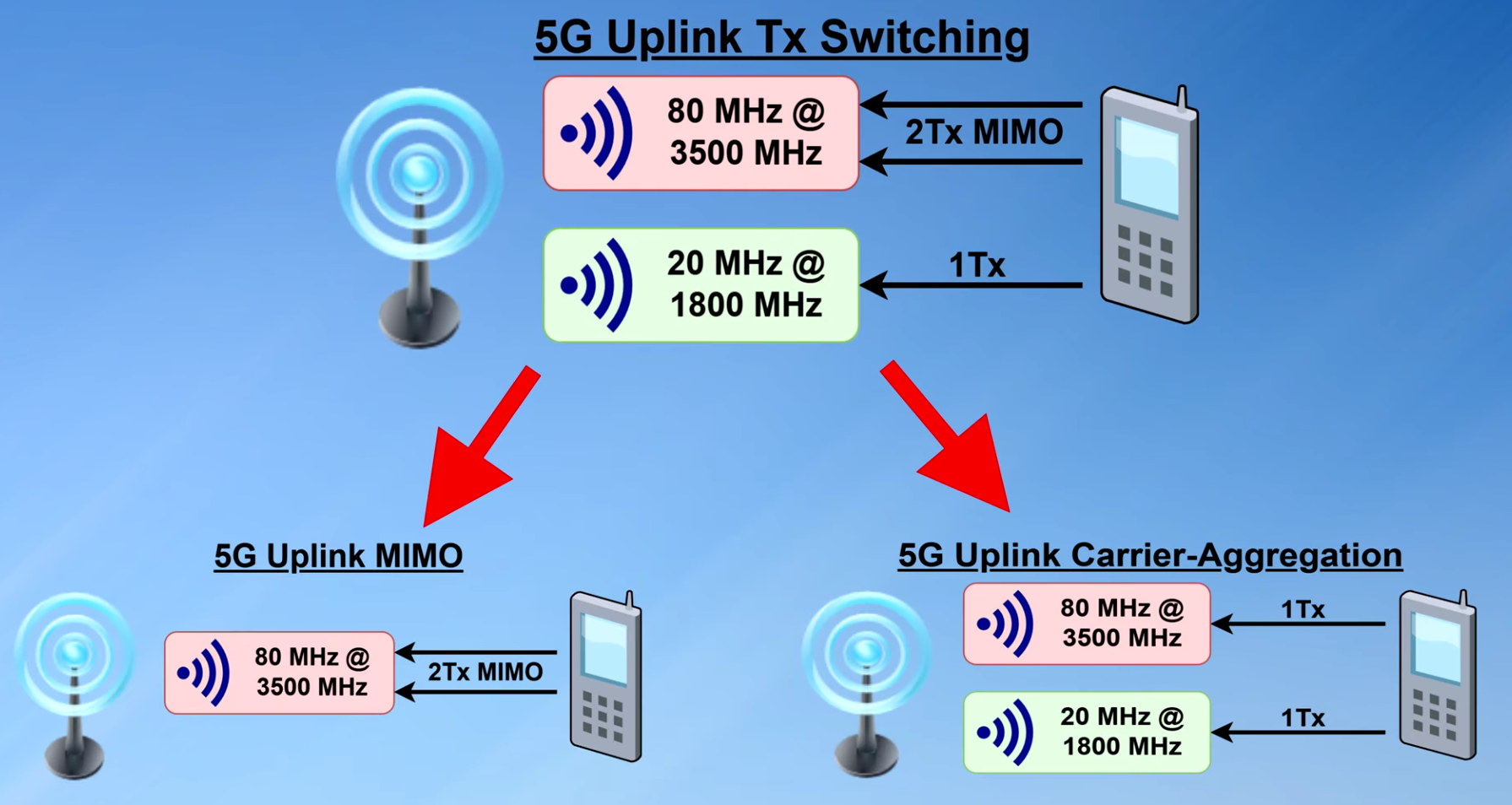
While the TDD carrier is in the downlink slots time domain, a handset uses one of its two available transmitting antennas to transmit uplink data on the FDD carrier. As soon as the TDD carrier transitions to the uplink slots time domain, both the transmitting antenna previously used for uplink data transmission on the FDD carrier and the other standby transmitting antenna switch to the TDD carrier. Spatial multiplexing is then used to send two data streams to the base station on the TDD carrier. This feature effectively enables handsets with two transmitting antennas to increase their uplink throughput by around 40%, compared to using 5G uplink carrier aggregation or 5G uplink MIMO alone.
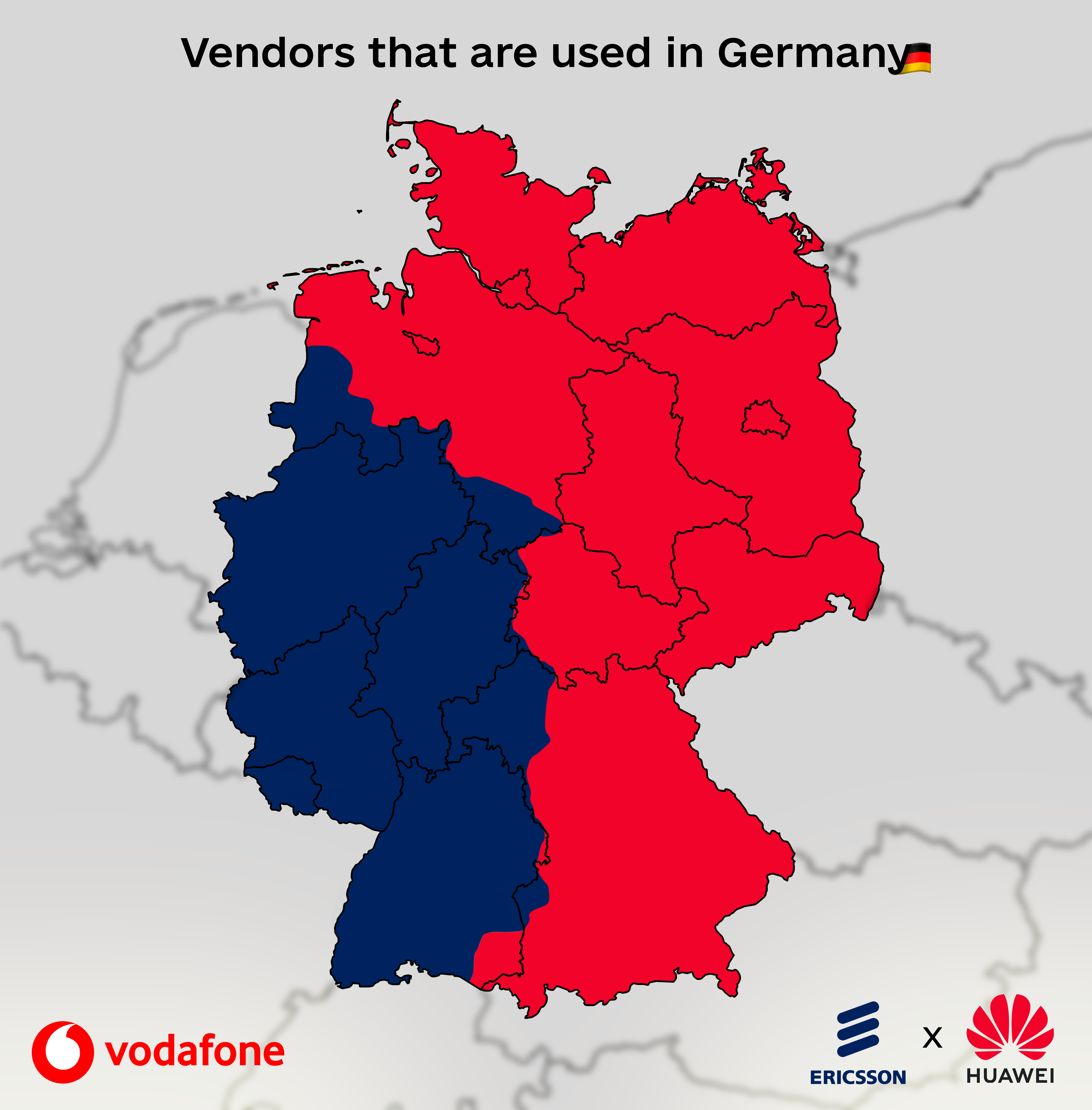
However, there are a few caveats that Vodafone also mentioned in their press release, which are important to understand. Firstly, the uplink TX switching feature has only been rolled out in the Ericsson vendor area for now. This means that the feature currently covers only 35–40% of Germany, mostly in the west and southwest, because for the bigger part of Germany, Vodafone DE uses Huawei as their RAN vendor. Thanks to Roman for the great graphic!
Another important consideration is that currently, only a limited number of handsets support this feature, with the Xiaomi 15 Ultra and 17 Ultra being the only devices that were officially mentioned and marked as supported models. This will, of course, change very soon as handsets become more capable and OEMs enable these features more broadly. For now, however, the vast majority of users will probably not be able to take advantage of this feature, and will instead use either 5G uplink carrier aggregation or 5G uplink MIMO alone.
Furthermore, the aforementioned handsets have another limitation regarding the Release 16 uplink TX switching feature. The Xiaomi 15 Ultra and Xiaomi 17 Ultra only support a maximum of two downlink carriers in combination with Uplink TX Switching. This is important since most Vodafone DE base stations feature three 5G bands: 3.5 GHz, 1.8 GHz and 700 MHz. If the network were to configure these handsets to aggregate all three bands, the handsets would not be able to use the uplink TX switching feature.

Fortunately, however, Vodafone DE was aware of this limitation beforehand and configured their network to prioritise the maximum uplink configuration for handsets that support uplink TX switching. This means that, if a handset supports the uplink TX switching feature, the network will prefer and configure 5G carrier aggregation combinations that support the highest uplink capacity. In this case, the Xiaomi 15 or 17 Ultra will only be assigned two downlink cells (3.5 GHz + 1.8 GHz or 3.5 GHz + 700 MHz), enabling the devices to take advantage of uplink TX switching. In practice, the downlink capacity barely decreases because the large TDD carrier is always involved and provides the most downlink capacity anyway.
All things considered, I really appreciate Vodafone DE’s efforts to push the boundaries of 5G, continuously testing and improving their network by adding new features.